
Japan's $12 Billion AI Sovereignty Play: What GMI Cloud's Massive Infrastructure Investment Means for Global Tech Security
By AIBlogMax - 19/03/2026 - 0 comments
In a landscape where AI technology has become the cornerstone of national competitiveness, Japan is making a bold statement. GMI Cloud's announcement of a staggering $12 billion investment in a 1-gigawatt sovereign AI infrastructure initiative marks a watershed moment in how nations approach technological independence. This isn't just another data center expansion—it's a strategic blueprint for regional AI sovereignty that could reshape how countries balance innovation with security in an increasingly fragmented digital world.
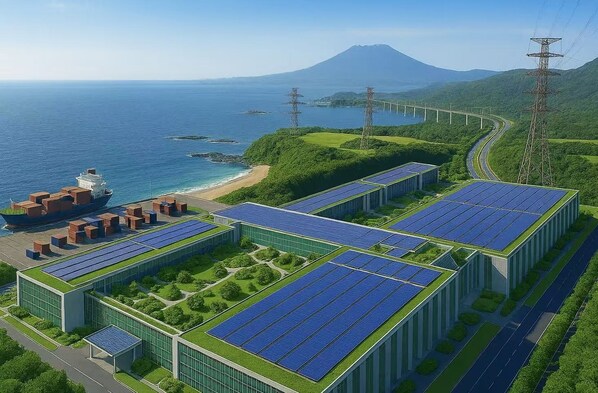
The initiative, dubbed an "AI Factory," represents one of the largest single investments in sovereign computing infrastructure to date. By partnering with Taiwan and the United States, GMI Cloud is establishing a new paradigm that addresses critical concerns around data sovereignty, cybersecurity, and technological self-reliance. For MSP providers, enterprise IT leaders, and security professionals monitoring global technology trends, this development signals a fundamental shift in how critical AI infrastructure will be deployed and protected in the coming decade.
The Strategic Architecture of Sovereign AI
At its core, the GMI Cloud initiative in Kagoshima addresses a pressing vulnerability that nations worldwide are beginning to recognize: overdependence on centralized, foreign-controlled cloud infrastructure for critical AI workloads. The concept of sovereign AI infrastructure goes beyond simple data residency requirements—it encompasses the entire technology stack, from hardware procurement to operational security protocols aligned with zero trust architecture principles.
This 1-gigawatt facility will provide GPU-as-a-Service capabilities specifically designed for large-scale physical AI applications. The scale is remarkable: to put it in perspective, a single gigawatt of power capacity rivals the energy consumption of a mid-sized city. This massive power allocation reflects the energy-intensive nature of training and running large language models and complex AI systems that are increasingly vital to national security, economic competitiveness, and technological innovation.
The Japan-Taiwan-US partnership structure is equally significant. By combining Japanese regulatory frameworks, Taiwanese semiconductor expertise, and American cloud technology leadership, the initiative creates a resilient supply chain less vulnerable to geopolitical disruptions. For organizations managing AWS Azure deployments and hybrid cloud strategies, this model demonstrates how regional partnerships can provide alternatives to traditional hyperscaler dependencies while maintaining world-class capabilities.
Cybersecurity Implications for Enterprise Infrastructure
From a security perspective, sovereign AI infrastructure addresses several critical vulnerabilities that keep SOC teams and security architects awake at night. The concentration of AI training data and models in facilities subject to foreign jurisdiction creates potential attack vectors that extend beyond traditional endpoint security concerns into the realm of national security.
Ransomware attacks on AI infrastructure represent a particularly acute threat. Imagine the impact if threat actors successfully encrypted the training data or model weights for AI systems controlling critical infrastructure, healthcare diagnostics, or financial systems. The backup and disaster recovery requirements for petabyte-scale AI training datasets dwarf traditional enterprise data protection challenges, requiring purpose-built solutions that few organizations have fully addressed.
The shift toward sovereign AI infrastructure isn't just about data residency—it's about creating resilient, trustworthy foundations for the AI systems that will power critical decision-making across every sector of the economy.
GMI Cloud's initiative will necessarily implement advanced AI cybersecurity measures to protect these valuable assets. This includes applying zero trust principles to AI workload access, implementing microsegmentation for different training environments, and developing AI-specific threat detection capabilities. For managed service providers and enterprise security teams, the security architecture patterns that emerge from sovereign AI facilities will likely influence best practices for protecting AI workloads across all deployment models.
The Microsoft and Multi-Cloud Equation
While details about specific technology partnerships remain limited, the implications for platforms like Microsoft 365 and AI in Microsoft ecosystems are significant. Microsoft has invested heavily in AI integration across its enterprise software stack, from Copilot features in productivity applications to Azure AI services. Sovereign AI infrastructure creates both challenges and opportunities for these integrations.
Organizations leveraging AI technology within Microsoft environments will need to consider data gravity effects—where computationally intensive AI processing occurs relative to where enterprise data resides. For Japanese enterprises using Microsoft 365 and requiring sovereign AI capabilities, having local GPU-as-a-Service infrastructure could enable AI-enhanced productivity features while maintaining data sovereignty compliance.
The multi-cloud implications extend to AWS Azure strategies as well. Forward-thinking MSP providers are already architecting solutions that distribute workloads across hyperscaler clouds, regional sovereign clouds, and on-premises infrastructure based on regulatory requirements, performance needs, and cost optimization. GMI Cloud's initiative adds a significant new option to this equation, particularly for AI and machine learning workloads with sovereignty constraints.
Key Takeaways for IT Leaders and Service Providers
The GMI Cloud announcement offers several critical insights for technology leaders planning their infrastructure and security strategies:
- Regulatory momentum: Expect increasing government pressure for critical AI workloads to run on sovereign infrastructure, particularly in sensitive sectors like healthcare, finance, and defense
- Supply chain diversification: Single-vendor dependencies for AI infrastructure create unacceptable risks; regional partnerships and alternatives will become strategic imperatives
- Security architecture evolution: AI-specific security frameworks will mature rapidly as sovereign facilities implement zero trust, advanced endpoint security, and specialized threat detection for AI workloads
- Energy and sustainability: The massive power requirements of AI infrastructure will drive innovation in energy-efficient computing and renewable power integration
- Skills development: Managing sovereign AI infrastructure requires specialized expertise in AI operations, security, and compliance that most organizations currently lack
Why This Matters
For MSP providers and enterprise IT leaders, GMI Cloud's $12 billion initiative represents far more than a single data center project in Japan. It signals the beginning of a fundamental restructuring of global AI infrastructure along sovereignty lines—a trend that will reshape vendor relationships, security architectures, and strategic planning across the technology sector.
Organizations currently relying entirely on hyperscaler clouds for AI workloads should begin evaluating how sovereignty requirements might impact their architecture in the next 3-5 years. This doesn't necessarily mean abandoning AWS Azure or Microsoft 365 platforms, but rather developing hybrid strategies that can accommodate regulatory requirements while maintaining operational flexibility.
From a cybersecurity perspective, the emergence of sovereign AI infrastructure creates new imperatives for SOC teams and security architects. Protecting AI training data, models, and inference systems requires specialized capabilities beyond traditional endpoint security and network protection. The integration of AI cybersecurity tools with robust backup and disaster recovery strategies specifically designed for AI workloads will become table stakes rather than advanced capabilities.
As nations increasingly view AI capability as essential to economic competitiveness and national security, expect more sovereign AI initiatives to emerge globally. The Japan-Taiwan-US model pioneered by GMI Cloud may well become a template for regional partnerships that balance technological advancement with security and sovereignty concerns—fundamentally changing how the next generation of tech infrastructure is built, operated, and protected.